İçindekiler
KİTAP HAKKINDA III
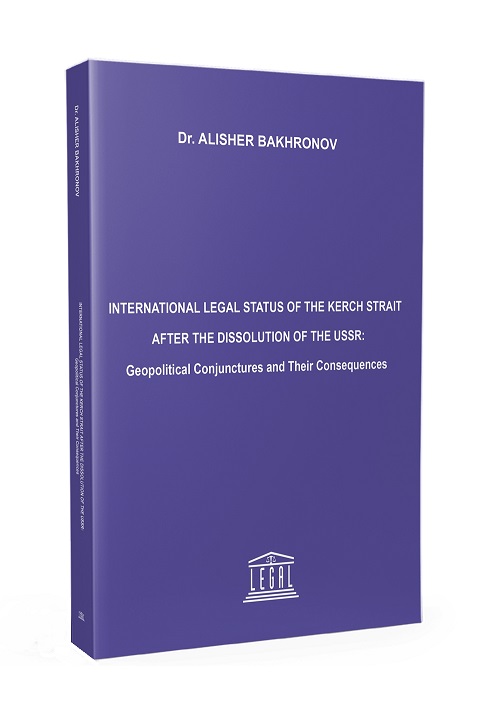
PREFACE V
INTRODUCTION 1
CHAPTER ONE
1. Historical Context of the Legal Status of the Kerch Strait 11
1.1 The Kerch Strait During the Soviet Era: A Unified Legal Regime 11
1.2 The Dissolution of the USSR and Emerging Challenges in Legal Regulation 13
1.3 Legal Frameworks for International Straits: The Role of the 1982 United Nations Convention on the Law of
the Sea 16
CHAPTER TWO
2. The 2003 Treaty: Foundations of a Bilateral Regime 21
2.1 Analysis of Key Provisions of the Treaty Between the Russian Federation and Ukraine on Cooperation in
the Use of the Sea of Azov and the Kerch Strait 21
2.2 Problems and Conflicts in the Implementation of the Treaty 25
2.2.1 The Tuzla Island Dispute and Its Legal Significance 29
2.3 The Impact of Crimea’s Annexation on the Implementation of the Treaty Between the Russian Federation
and Ukraine on Cooperation in the Use of the Sea of Azov and the Kerch Strait 31
CHAPTER THREE
3. Geopolitical Challenges: The Events of 2014 and Their Consequences 35
3.1 The Annexation of Crimea: Legal and Political Dimensions 35
3.2 International Response: Sanctions, UN Resolutions, and the Positions of International Organizations 38
3.3 The Impact of Crimea’s Annexation on Ukraine’s Maritime Sovereignty 42
3.3.1 The Impact on Ukraine’s Sovereignty Over the Kerch Strait 42
3.3.2 Construction of the Crimean Bridge over the Kerch Strait 43
3.3.3 Kerch Crisis on November 25, 2018 44
3.3.4 The Incident at Cape Fiolent on June 23, 2021 46
3.3.4.1. The Incident and the Stance of the Parties Involved 46
3.3.4.2. Legal Aspects 47
3.3.4.3. The Right of Innocent Passage for Warships 49
3.3.4.4. Political Aspects and Legal Risks 49
CHAPTER FOUR
4. The Kerch Strait in Wartime: The 2022 Escalation of Conflict 51
4.1 Blockade and Militarization: A New Phase of Conflict 51
4.2 Impact of Military Actions on International Maritime Law 54
4.3 Challenges in Enforcing Ukraine’s Sovereignty Over the Sea of Azov and the Kerch Strait Under
International Law 57
CHAPTER FIVE
5. The Role of International Mechanisms in Conflict Resolution 61
5.1 The International Tribunal for the Law of the Sea and Its Decisions 61
5.2 Arbitration Prospects: Precedents and Potential Paths Forward 64
5.3 The Role of the EU, UN, and NATO in Supporting Regional Stability 67
5.4 The Limits of International Adjudication in Times of Armed Conflict 70
CHAPTER SIX
6. Paths to Conflict Resolution and Recommendations 73
6.1 Restoration of Bilateral Cooperation: Is It Possible? 73
6.2 International Legal Mechanisms for Dispute Resolution 75
-Judicial and Arbitral Proceedings 75
-Institutional Innovation 76
6.3 Prospects for Establishing a New Legal Regime for the Kerch Strait 77
Model One: Restored Bilateral Regime with International Guarantees 77
Model Two: International Strait Status Under UNCLOS 78
Model Three: Transitional International Administration 79
Comparative Assessment and Recommendations 80
CONCLUSION 83
-For Ukraine 88
-Conditions for Russian Re-engagement with International Law 88
-For the European Union and Its Member States 89
-For the United Nations 90
-For NATO and Allied States 90
-For the International Judicial and Arbitral Bodies 91
-For the International Maritime Organization 91
-Concluding Observation 92
APPENDICES
-APPENDIX A 93
-Treaty between the Russian Federation and Ukraine on Cooperation in the Use of the Sea of Azov and the Kerch Strait (2003): Key Provisions 93
-APPENDIX B 94
-Regional Maps: Geopolitical Dynamics of the Kerch Strait 94
-APPENDIX C 99
-UN Resolutions Related to Crimea and the Kerch Strait 99
-APPENDIX D 100
-Timeline of Key Events (1991–2026) 100
-APPENDIX E 102
-Comparative Table of Strait Regimes Under UNCLOS 102
REFERENCES
-Monographs and Edited Volumes 105
-Sources of International Law and Materials from International Judicial Proceedings 111
-Treaties and Conventions 112
-Official Documents and Policy Sources 114
-Media and Online Sources 114

Yorumlar
İlk Yorumu Ekle